Telegram analytics has come a long way since 2025. It has gone from simple subscriber counts to complex data-driven insights that help channels, groups, and bots succeed. There are more than 1 billion active users on Telegram around the world, so channel managers, marketers, and businesses that use Telegram’s growing ecosystem need to know how to use advanced analytics.
This in-depth guide covers the latest telegram analytics techniques for 2025, important telegram channel insights, and tried-and-true ways to measure telegram roi. If you want to grow your news channel, business bot, or engaged community faster and get the most out of your money, you need to learn these analytics strategies.
Why Advanced Analytics Matters More Than Ever in 2025
The competition for Telegram channels has gotten a lot tougher, so making decisions based on data is essential for long-term growth and success. People who run channels and only use their gut feelings or basic metrics are quickly falling behind those who use detailed telegram engagement metrics and telegram channel performance analytics.
Telegram’s algorithm changes in 2025 put more weight on real engagement than on the number of subscribers. The platform now gives more weight to channels that show regular user interaction, real conversations, and real community building. This change means that to keep your visibility and growth, you need to know how your audience acts, what kinds of content they like, and what makes them engage.
New features like better Stories, Mini Apps, and more powerful APIs have opened up brand new possibilities for businesses and content creators. But these features also create complicated data streams that need advanced analysis to work well. Channels that learn how to use these new analytics tools will have a big edge over their competitors when it comes to keeping and making money from their audience.
Also, the growing focus on measuring ROI has made advanced analytics necessary for getting sponsors, investors, and business partners. Before agreeing to work together or spend money on Telegram channels, brands and advertisers now want to see detailed performance data, audience demographics, and conversion metrics.
Modern Telegram analytics encompasses far more than traditional social media metrics, extending into behavioral analysis, predictive modeling, and real-time optimization strategies that can dramatically improve channel performance and business outcomes.
Key Metrics Every Telegram Admin Should Track
To know which metrics are really important for your channel’s success, you need to be able to tell the difference between vanity metrics that look good but don’t help you reach your goals and actionable metrics that do.

In 2025, the best Telegram channel operators will focus on a balanced scorecard of growth, engagement, and monetization metrics that give them a full picture of how their channel is doing and where it’s going.
Subscriber Growth Analytics
Tracking subscriber growth well means more than just counting followers. It also means looking at the quality, source, and retention of your audience members. The track telegram subscribers approach in 2025 looks at long-term growth patterns instead of quick spikes that don’t last.
Join and leave rate analysis gives important information about how well content is doing and how happy the audience is. Find patterns in your daily, weekly, and monthly join/leave ratios and use that information to improve your content strategy. High-performing channels usually have join rates that are 3 to 5 times higher than leave rates all the time.
To assess the quality of your subscribers, you need to look at how engaged they are, how they interact with each other, and how long they stay. Instead of passive observers who don’t add to engagement metrics, focus on getting users who are active in your community.
Analyzing the geography and demographics of new subscribers can help you choose the best times, languages, and topics for your content based on the makeup of your audience. Use this information to change when you post so that it fits with when your most active users are online.
When you track where new subscribers come from, you can see which types of promotions, cross-promotional partnerships, or content types bring in the best audience members. This information lets you put your resources toward the growth channels that work best and get rid of the ones that don’t.
Engagement Metrics That Drive Success
To figure out the engagement rate on Telegram, you need to know about different types of interactions and how important they are for your channel’s goals and content strategy.
Post view analysis should look at more than just the total number of views. It should also look at view-through rates, peak viewing times, and how different types of content affect viewing patterns. Most of the time, posts that do well get 40% to 70% of their total subscribers to see them within 24 hours of being published.
Tracking reactions and comments gives us information about how emotionally resonant and effective community building is. Keep an eye on which content sparks the most interesting conversations and use that information to plan how to make more content and get people involved in the community.
The click-through rates on links, calls to action, and promotional content have a direct effect on how much money a business can make and how well it does. To get the most conversions, keep track of CTR across different types of content, times of day, and audience groups.
Forward and share rates show how likely it is that content will go viral and how it can grow on its own. Content that gets a lot of shares often brings in new subscribers and makes the channel more visible in Telegram’s recommendation algorithms.
Time-based engagement patterns show you when your audience is most likely to read your posts and when they are most likely to interact with them. Use this information to get the most out of your first engagement, which has a big effect on how well your posts do over time and how well the algorithm likes them.
Revenue and ROI Measurement
Figuring out the right telegram ROI needs advanced tracking systems that link what happens in a channel to business results and financial results.
Tracking direct monetization means keeping track of things like subscription fees, product sales, service bookings, and other money that comes in right away through your Telegram channel. Use tracking systems that link sales to certain posts, campaigns, or marketing efforts.
Indirect value calculation includes things like getting leads, raising brand awareness, keeping customers, and other benefits that help a business succeed in the long run but don’t bring in money right away. Based on your overall business model and the lifetime value of your customers, give these results a dollar value.
When looking at costs, you should think about both direct costs like advertising, content creation, and management time, as well as the opportunity costs of using Telegram instead of other marketing channels.
Attribution modeling helps you figure out which channel activities are most important for reaching your business goals. This lets you better allocate resources and improve your strategy to get the most return on investment.
Best Tools for Telegram Analytics in 2025
Telegram’s analytics tool landscape has grown a lot. It now includes everything from basic native insights to advanced third-party platforms with AI-powered analysis capabilities.
Choosing the right mix of telegram analytics tools depends on your needs, how good you are with technology, and how much money you have to spend. Most successful channel operators use a multi-tool approach that combines built-in analytics with third-party tools that are made for specific tasks.
Telegram’s Native Analytics Features
Telegram’s built-in Channel Insights give you important information about how well your posts are doing, how many new subscribers you’re getting, and how much people are interacting with your channel. The updates for 2025 include better demographic data, better time-series analysis, and better integration with Stories and Mini App analytics.
Stories analytics now give you detailed view-through rates, interaction tracking, and audience retention metrics that help you make this content format even better. You can use Stories data to try out content ideas, see how interested your audience is, and get people to visit your main channel posts.
The native analytics dashboard lets you see data in real time, which is useful for keeping an eye on how well your campaigns are doing and quickly responding to popular topics or viral content opportunities.
Bot analytics for channels with bots include statistics on how users interact with the bots, how often they use commands, and how well the conversion funnel works. This information can help improve automated customer service and sales.
Third-Party Analytics Platforms
Professional telegram channel tracker platforms have more advanced features than Telegram itself, such as competitor analysis, industry benchmarking, and predictive analytics.
Cross-channel analytics are available on full platforms, which let you compare performance across different Telegram channels, keep an eye on your competitors, and spot trends and opportunities in your field.
Advanced segmentation tools let you look at your audience in detail, spot patterns in their behavior, and tailor content to each user based on their characteristics and past interactions.
With custom reporting, you can make reports that are ready for clients, keep an eye on important KPIs for your business model, and automate routine analytics tasks to make things run more smoothly.
Custom Bot Analytics Solutions
Using Telegram’s API to make your own telegram bot analytics tools gives you unlimited freedom to track the metrics that are most important to your business model and goals.
Real-time data processing lets you respond right away to user actions, trending topics, and engagement opportunities that can have a big effect on how well your channel does.
Integration with other business systems lets you track ROI, analyze the customer journey, and create attribution models that link Telegram activities to bigger business results.
Using real-time performance data and predictive algorithms, automated optimization features can change posting schedules, content suggestions, and engagement strategies.
Advanced Techniques for Data-Driven Growth
To get the most out of complex telegram data analytics strategies, you need to combine data from different sources, use different analytical methods, and use different optimization methods.
The best channels in 2025 use AI-powered insights, predictive modeling, and advanced segmentation to stay ahead of the competition and keep getting better at what they do.
Content Performance Optimization
When you A/B test Telegram posts, you test different headlines, images, posting times, and calls to action in a planned way to find the best combinations for your audience.
When you analyze the format of your content, you can find out if your audience likes text posts, images, videos, polls, or a mix of all three. To get the most out of your content, keep an eye on how people interact with it in different formats.
Timing optimization looks at past engagement data to figure out when your audience is most active and open to different kinds of content. This includes making plans for daily posts and seasonal content.
Viral content analysis looks at your best-performing posts to find patterns, topics, or ways of presenting that really connect with your audience and help your business grow naturally.
Audience Segmentation Strategies
Behavioral segmentation separates your audience into groups based on how often they interact with your content, what types of content they like, and how often they engage with it. This lets you create content strategies that are specific to the needs and interests of different user groups.
Using available data to segment your audience by demographics helps you customize the language, cultural references, and timing of your content for different geographic and demographic groups.
Journey-based segmentation follows users from the time they sign up to the time they leave, allowing you to create targeted strategies for bringing in new subscribers, getting inactive users to start using your service again, and getting the most value from your most loyal followers.
AI-Powered Analytics Implementation
Machine learning algorithms can find patterns in user behavior, content performance, and engagement trends that human analysts might not see. This makes predictions and optimization strategies more accurate.
When you use natural language processing on comments and messages, you can do things like sentiment analysis, find out what topics are trending, and automatically moderate content. This makes it easier to manage a community.
Predictive analytics help you plan for channel growth by letting you know how many new subscribers you can expect, how engaged they will be, and how well your content will do. This lets you change your strategy and plan your resources better.
Case Studies: Real-World Analytics Success Stories
Looking at how successful channels use telegram growth success strategies gives you useful tips and tried-and-true methods that you can use to reach your own goals.
These telegram case studies show how powerful data-driven decision making and advanced analytics can be when used in different types of channels and business models.
News Channel Growth Analysis
A major tech news channel saw a 340% increase in subscriber engagement by using detailed analytics insights to systematically improve their content. They looked at posting times, types of content, and topics that their audience liked to find the best ways to reach them.
The channel used A/B testing on headlines, which led to a 45% increase in click-through rates and a 25% increase in article engagement. They found that headlines that asked questions worked much better for their tech-savvy audience than those that made statements.
Geographic analysis showed that 60% of their audience was in certain time zones. This led to better posting schedules that boosted initial engagement by 80% and made posts more visible in Telegram’s algorithm.
E-commerce Channel Optimization
An online store used advanced analytics to improve their product promotion strategy. Over six months, their Telegram channel brought in 180% more sales.
They set up conversion tracking that linked engagement with their Telegram posts to visits to their website and purchases. This helped them figure out which types of products and presentation styles gave them the best return on investment for their marketing efforts.
By dividing customers into groups based on their purchase history and how they interacted with the brand, personalized content strategies were possible. This led to a 65% increase in repeat purchases among Telegram subscribers compared to other marketing channels.
Service Bot Performance Analysis
A SaaS company used a customer service bot to cut response times by 40% and raise customer satisfaction scores by 30% by using detailed interaction analytics and optimization.
They looked at the patterns of conversations to find common question types. This made it easier for automated responses to work and for people to be routed to the right human agent when needed.
Analysis of the user journey showed where the support process was getting stuck. This led to changes to the interface and improvements to the workflow that made the overall customer experience much better.
Common Analytics Mistakes to Avoid
Knowing what not to do with telegram analytics can help you avoid wasting resources and make sure that your data analysis work helps your channel reach its goals for success and growth.
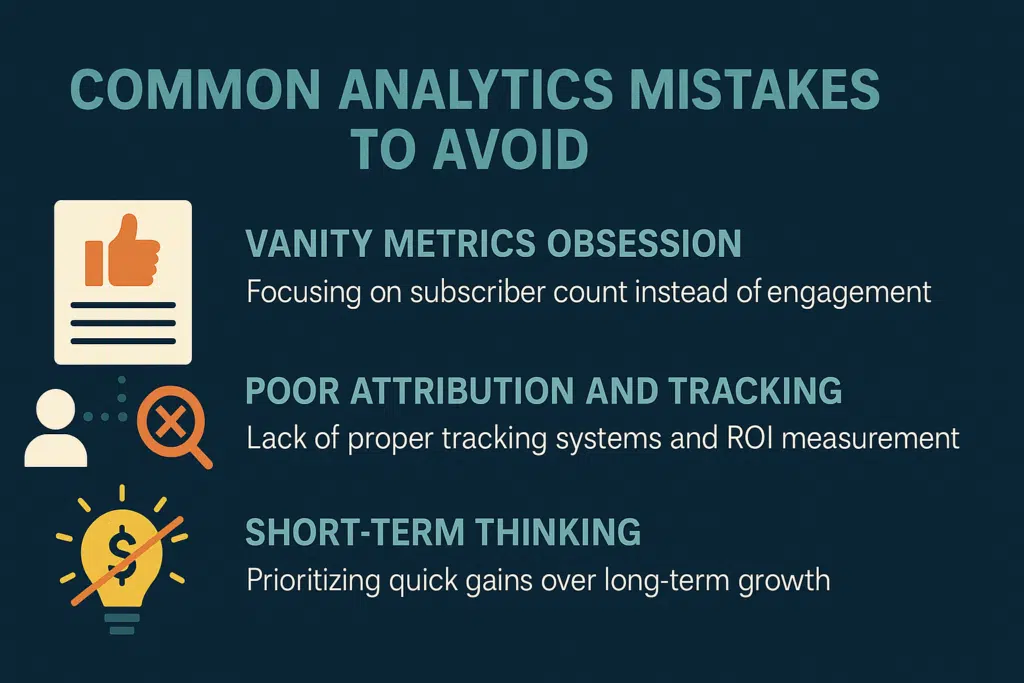
A lot of channel managers look at metrics that seem impressive but don’t really relate to business success. This leads to misguided optimization efforts and bad decisions about how to use resources.
Vanity Metrics Obsession
If you only care about how many subscribers you have and not how engaged they are, you’ll end up using fake growth strategies that don’t work for your business or help your channel grow in a way that lasts.
Don’t fall for fake telegram stats. Instead, focus on real engagement metrics instead of inflated numbers that don’t show real audience interest or conversion potential.
Smaller, more focused audiences that interact with your business in a meaningful way often lead to better business results than larger, less engaged subscriber bases that only interact with your business on the surface.
Poor Attribution and Tracking
Not putting in place the right tracking systems makes it impossible to tell which strategies work and which don’t. This means that people keep spending money on strategies that don’t work and ignore those that do.
Channel managers can’t show stakeholders, sponsors, or business partners that their resources are being used wisely or that they are getting value from them without accurate ROI measurement.
Not collecting all the data can make it hard to understand things, which can stop optimization and lead to wrong conclusions about what the audience likes and how well the content is doing.
Short-Term Thinking
Strategies that only look at short-term metrics and don’t take long-term trends and sustainability into account can give channels short-term boosts but hurt their overall health and growth potential.
To make analytics work, you need to find a balance between short-term performance metrics and long-term strategic goals and growth patterns that create lasting value for your audience.
The Future of Telegram Analytics Beyond 2025
Artificial intelligence integration, real-time data processing, and more advanced personalization technologies that change how channels interact with their audiences will all have an impact on the future of telegram analytics.
Channel managers can get ready for new opportunities and make sure their analytics strategies stay competitive and useful as the platform changes by keeping an eye on these new trends.
AI and Machine Learning Integration
With advanced AI in Telegram, it will be possible to make content recommendations based on predictions, automate optimization strategies, and analyze audience behavior in ways that go beyond what humans can do now.
Natural language processing will help us understand how subscribers feel, what they like to read, and new trends that we can use to change our strategies and plan our content ahead of time.
Based on real-time performance data and predictive modeling, machine learning algorithms will automatically improve posting schedules, content formats, and ways to get people to interact with posts.
Real-Time Analytics Evolution
Instantaneous data processing will make it possible to quickly respond to viral content opportunities, trending topics, and spikes in engagement that can have a big effect on the growth and visibility of a channel.
Live optimization will change your content strategies, promotional activities, and engagement tactics in real time based on how well your content is doing and how your audience behaves.
Dynamic content personalization will give different groups of people personalized experiences at the same time, making them more relevant and engaging for a wider range of subscribers.
Advanced Personalization Technologies
Tracking each user’s journey will allow for highly targeted content delivery, personalized recommendations, and tailored engagement strategies that give each subscriber the most value.
Behavioral prediction algorithms will be able to guess what users want, need, and will do, which will allow for proactive content creation and engagement strategies that improve the user experience and keep them coming back.
Cross-platform integration will give you full analytics across all channels and touchpoints, which will help you better understand how your audience behaves and how to better attribute your marketing efforts.
Conclusion: Mastering Telegram Analytics for Sustainable Success
In 2025, advanced telegram analytics will be more than just keeping track of basic metrics. It will be about really getting to know your audience, improving every part of your content strategy, and making decisions based on data to support long-term growth.
The channel owners and businesses that do well on Telegram are the ones that use full analytics strategies, buy the right tracking systems, and keep improving their methods based on actual performance data instead of guesses or industry-wide trends.
To be successful, you need to find a balance between different types of metrics. For example, growth indicators show the direction of your business, engagement metrics show the quality of your audience, and ROI measurements link your channel activities to your business results. This all-encompassing approach makes sure that your analytics work helps you reach your bigger goals.
This guide shows you the tools and techniques you need to use to set up advanced analytics strategies that can greatly improve the performance of your Telegram channel. But the key to success is to keep doing it, keep making it better, and keep up with new trends and platform updates.
Telegram is always adding new features and functions. To stay ahead of the competition and get the most out of your channel, you need to keep up with the best practices for analytics and new technologies.
Ready to transform your Telegram channel with advanced analytics and data-driven growth strategies? You can set up these complex tracking systems with the help of professional analytics tools and expert advice. They can also help you make sure you only focus on metrics that are important for your business model and goals.

Related items
We have designed an exceptional bot for you that allows you to simultaneously place automa
As we move into 2025, the world of digital communication has changed a lot, with more peop
Telegram has become one of the most powerful platforms for building engaged communities an